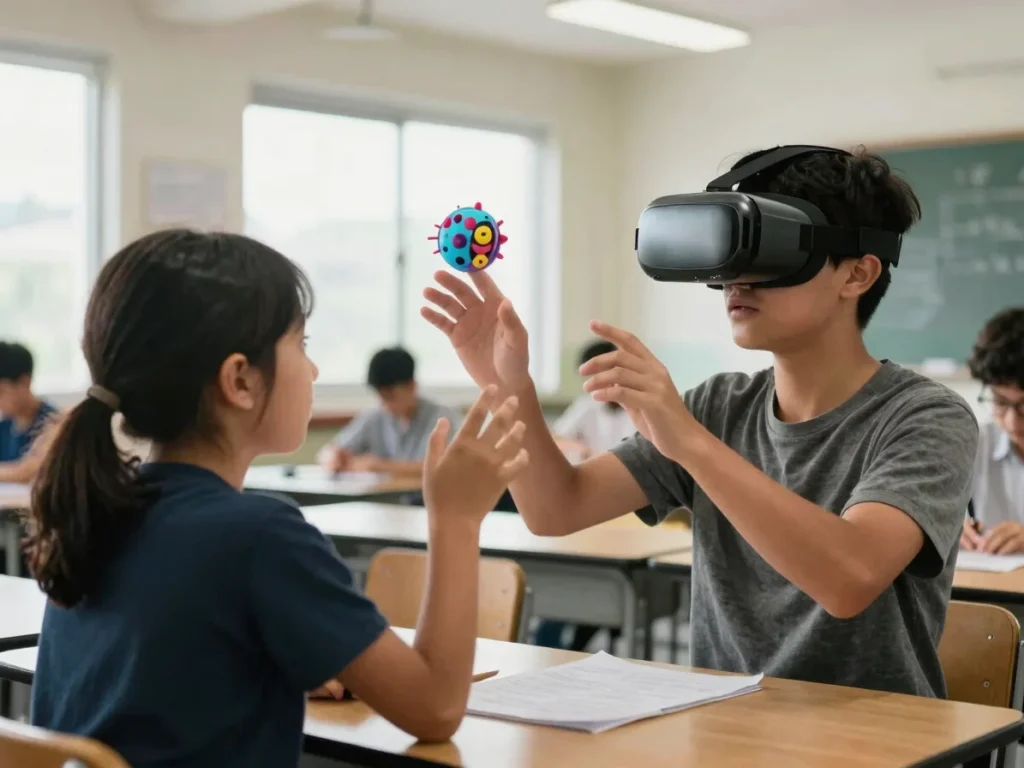
Each syllabus pairs subject content with hands-on VR and AR lab work, organized into modular units that fit standard semester timetables.
3
Subject classifications
Modular
Lesson unit structure
Per course
Hardware setup specified
Syllabus classes
Three subject classifications
Natural sciences
Foundational sciences
Learners move through cell structures, ecosystems, and physical forces as navigable three-dimensional scenes. Each unit ends with a spatial task that checks how the concept holds in space.
Engineering
Engineering and geometry
Learners assemble structures, test loads, and inspect spatial relationships in augmented overlays placed on real tables. Lessons are sequenced so measurement skills build from unit to unit.
Humanities
History and spatial context
Learners walk through reconstructed sites and trace how places changed over time. Instructors can pause each scene to discuss sources, timelines, and cause and effect with the class.
Curricular progression
Three stages from orientation to synthesis
01
Orientation
Learners set up headsets, learn navigation controls, and complete a short calibration unit. Instructors confirm each device and room layout before the first graded activity.
02
Immersive lab
Core subject units run as interactive lessons. Learners complete spatial tasks, and progress records update for both the learner and the instructor.
03
Analytical synthesis
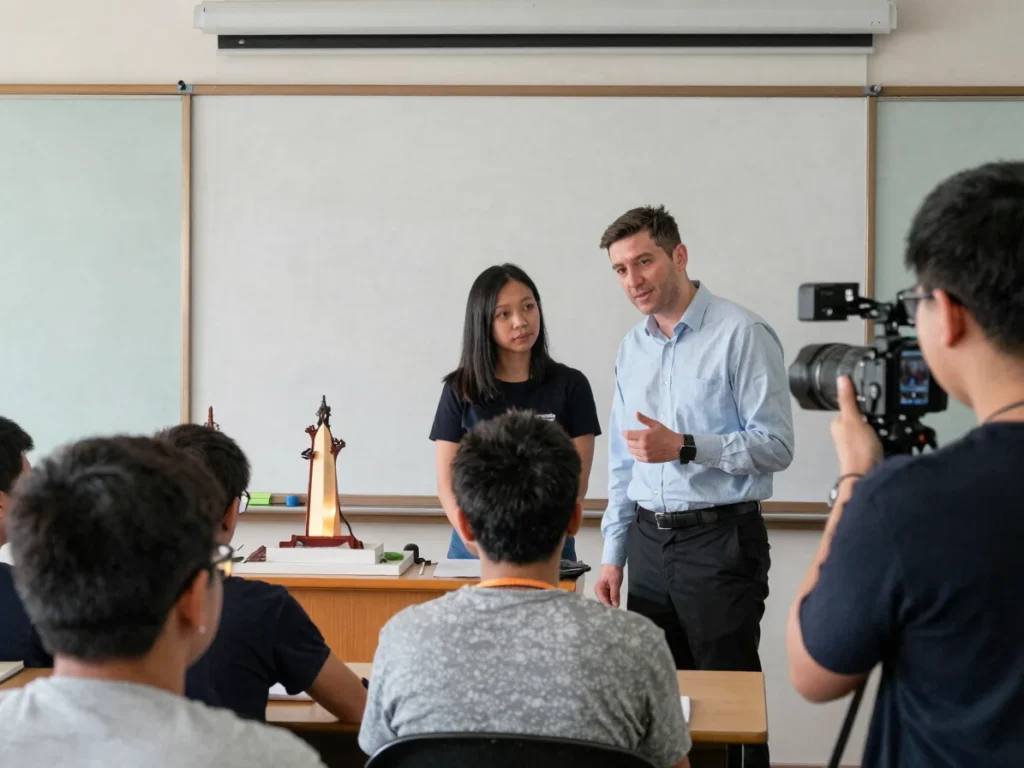
Learners bring findings back to the classroom, explain their reasoning, and compare results across units. Instructors use these discussions to review what each learner has grasped.